
9D-NLS Technology: Principles, Technical Structure and Training Guide
- Sally
- June 06, 2024
- 614
- 1
- 0
9D-NLS Technology: An Introduction to Its Principles and Applications
Exploring the technical background, electronic architecture and operating concepts of the 9D Nonlinear Analysis System.
1. Introduction to 9D-NLS Technology
The 9D-NLS System belongs to a category of computer-assisted nonlinear analysis equipment, sometimes referred to as a "brain machine." It combines electronic components, sensor technologies and specialized software to collect and process digital signals.
As technology continues to advance, the ability to organize and interpret complex information has become increasingly important. Nonlinear analysis systems represent one approach to exploring signal patterns through integrated hardware and software technologies.
2. Scientific Background and Historical Development
Research into electromagnetic phenomena and biological systems has attracted attention from scientists and inventors for more than a century. Several historical figures are frequently associated with the development of ideas in this field.
Nikola Tesla: His pioneering work in electrical engineering and high-frequency technologies contributed to the development of modern electrical science.
Georges Lakhovsky: He explored theories concerning electromagnetic oscillations and their possible relationship with biological systems.
Royal Raymond Rife: He conducted historical experiments involving electromagnetic frequencies and biological subjects, although many related health claims remain scientifically unverified.
These historical theories provide background for understanding the evolution of bioelectromagnetic research. However, they should not be interpreted as clinical evidence establishing the diagnostic or therapeutic effectiveness of modern NLS equipment.
3. Technical Structure of the 9D-NLS System
The 9D-NLS system integrates electronic hardware with computer software to support signal acquisition and digital processing. Depending on the model, its architecture may include digital trigger functions and analog electronic components.
One configuration described in this training program uses a digital trigger function simulated through the main processor and software, together with an analog trigger component based on a PN-junction transistor. These components represent different approaches to electronic signal triggering and system design.
The integration of hardware and software provides the foundation for the device's data-processing functions. Specific technical configurations may vary among manufacturers and product generations.
4. Differences Between Device Configurations
Different versions of 9D-NLS equipment may use different signal transmission methods and hardware components. Some earlier configurations incorporated headphone-style components described as magneto-inductive elements, while other versions adopted different electromagnetic signal arrangements.
Certain models may also include laser-based components as part of their hardware design. The operating principles, specifications and safety requirements of these components depend on the individual device.
References to alpha and theta brainwave frequencies are sometimes used to describe the theoretical operating concepts of different configurations. However, such references alone do not establish measurable effects on brain activity or clinical benefits.
5. Purpose of the 9D-NLS Training Program
This training program is designed to help users understand the general structure, operating procedures and software functions of the 9D-NLS system.
Key learning areas include:
- Understanding the basic hardware architecture.
- Learning about electronic signal acquisition and processing.
- Exploring the software interface and operating functions.
- Recognizing differences between device models and configurations.
- Following appropriate operating and equipment maintenance procedures.
6. Conclusion
The 9D-NLS system combines electronic sensing components and specialized software within a nonlinear analysis framework. Understanding its technical structure, historical background and model variations provides a foundation for learning how the equipment is designed and operated.
Through systematic training, users can develop a clearer understanding of its functions, technical characteristics and appropriate applications.
Disclaimer: This article is for educational and informational purposes only. The 9D-NLS system should not be considered a substitute for medically validated diagnostic procedures, professional medical advice or treatment. Claims regarding diagnostic accuracy and therapeutic benefits require appropriate scientific and clinical evidence.
Related Products
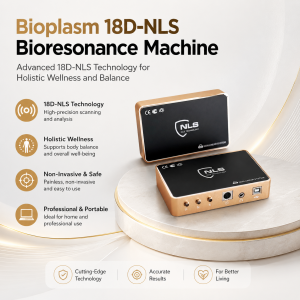
Bioplasm 18D-NLS Bioresonance Machine - Aura Chakra Healing
The principles of the 18D NLS Bioresonance have their origins in bioresonance research t..
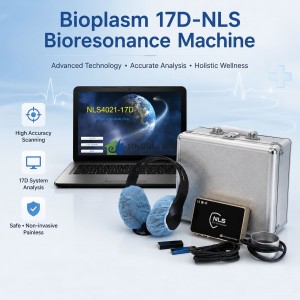
Bioplasm 17D-NLS Bioresonance Machine - Aura Chakra Healing
Bioresonance is basically the interaction between the organisms and their frequency patterns that ..

Bioplasm 8D-LRIS Bioresonance Machine - Aura Chakra Healing
The Non-Linear System (NLS) uses the most advanced Resonance spectroscopy analysis, Quantum resona..
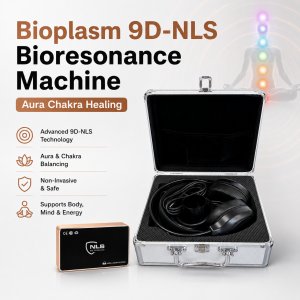
Bioplasm 9D-NLS Bioresonance Machine - Aura Chakra Healing
Bio-resonance or NLS-diagnostics aim at obtaining information about the state of your health ..