
NLS Research and the Study of Lung Tumor Characteristics
- Sally
- September 09, 2025
- 377
- 0
- 0

NLS Research and the Study of Lung Tumor Characteristics
Introduction
Lung tumors are an important subject in medical imaging research. Understanding their location, structure, surrounding tissues, and associated changes is essential for further clinical investigation.
Nonlinear System (NLS) research is an exploratory approach involving computer-assisted analysis and visualization of biological data. This article introduces the research methods and observational features discussed in an earlier study of NLS technology in relation to lung tumors.
Research Methods
The original study used a Metatron-4025 hardware system with Metapathia GR Clinical software to examine selected cases involving lung abnormalities.
The research focused on several observational aspects:
- Tumor location and structure: Examining the general shape, internal appearance, and location of lung abnormalities.
- Surrounding tissues: Observing the relationship between identified areas and nearby anatomical structures.
- Pleural changes: Recording observations involving pleural fluid and related structural changes.
- Lymph node regions: Including observations of mediastinal and other nearby lymph node areas.
Conventional medical imaging and histopathological examinations were also included in the original research process.
Observational Features Discussed in the Study
The study described several categories of lung abnormalities, including peripheral and central lesions, as well as lesions with different internal structural appearances.
It also discussed associated findings such as atelectasis, pleural effusion, and changes in nearby lymph node regions.
These observations illustrate the range of anatomical and structural features considered in the research. However, such findings are not specific to cancer and may occur in different medical conditions.
The Role of NLS Research
NLS technology has been explored as a computer-assisted approach to biological data visualization and analysis. Research into its applications continues to raise questions about methodology, reproducibility, and clinical validation.
It is important to emphasize that NLS analysis has not been established as a standalone method for diagnosing lung cancer. Suspected lung tumors require appropriate medical assessment, including validated imaging examinations and, when indicated, pathological testing.
Conclusion
The original research provides an overview of how NLS technology was explored in the study of lung abnormalities and their structural characteristics.
Further scientific validation is necessary to establish the reliability and clinical value of this approach. NLS research should be considered exploratory and should not replace conventional medical examinations or professional medical advice.
Related Products

Meta Hunter Bioresonance Machine with Chakra Healing
How Does Bioresonance Biofeedback Work? Each organ, tissue, and cell in our body has a disti..

Metatron 4025 Hunter Health Analyzer For Body Sub-Health Evaluate
Simply saying, it is an advanced Non-Invasive Diagnostic Device for physical examination & ana..

Bioplasm NLS 2 in 1 Bioresonance Machine - Aura Chakra Healing
The principles of 2 in 1 Bioplasm NLS developed by modern day Russian scientists reveal that ..
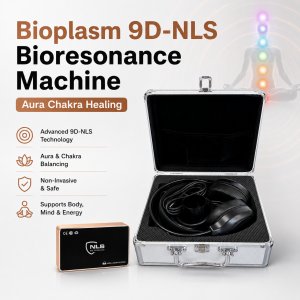
Bioplasm 9D-NLS Bioresonance Machine - Aura Chakra Healing
Bio-resonance or NLS-diagnostics aim at obtaining information about the state of your health ..